AIT: LSPR/QYLH-0001
ABSTRACT
The increasing complexity of public
administration, the expansion of public-private partnerships, and the growing
reliance on contractual arrangements between public authorities and private
entities have intensified the need for effective mechanisms for resolving
disputes involving public bodies. In this context, arbitration has emerged as a
potentially valuable alternative to conventional judicial proceedings,
particularly in disputes arising from public contracts, infrastructure
projects, public procurement, and commercial activities undertaken by
governmental entities. Nevertheless, the use of arbitration in the
administrative sphere raises distinctive legal questions that cannot be
addressed solely by reference to the principles governing ordinary commercial
arbitration.
This article examines the conceptual
foundations, legal nature, scope, and procedural framework of administrative
arbitration, with particular emphasis on the tension between arbitral autonomy
and the requirements of public law. It argues that the involvement of a public
authority in a dispute does not, by itself, determine whether that dispute is
arbitrable. Rather, arbitrability must be assessed by reference to the nature
of the legal relationship, the subject matter of the dispute, the statutory
powers of the public authority, and the public interests implicated in its
resolution. The article further distinguishes between disputes concerning the
contractual rights and financial obligations of public authorities, which may
generally be suitable for arbitration subject to applicable law, and disputes
concerning the exercise of sovereign regulatory powers, the validity of
administrative acts, or matters reserved to public courts by legislation.
Adopting a comparative legal
approach, the article examines the English arbitration framework, particularly
the Arbitration Act 1996 as amended by the Arbitration Act 2025, the United
States framework governing public contract disputes, and the international
standards reflected in the UNCITRAL Model Law on International Commercial
Arbitration and the 1958 New York Convention. It demonstrates that although
arbitration can promote efficiency, technical expertise, procedural
flexibility, and commercial certainty, its use in public disputes requires
safeguards concerning consent, impartiality, transparency, jurisdiction,
procedural fairness, and judicial supervision.
The article concludes that
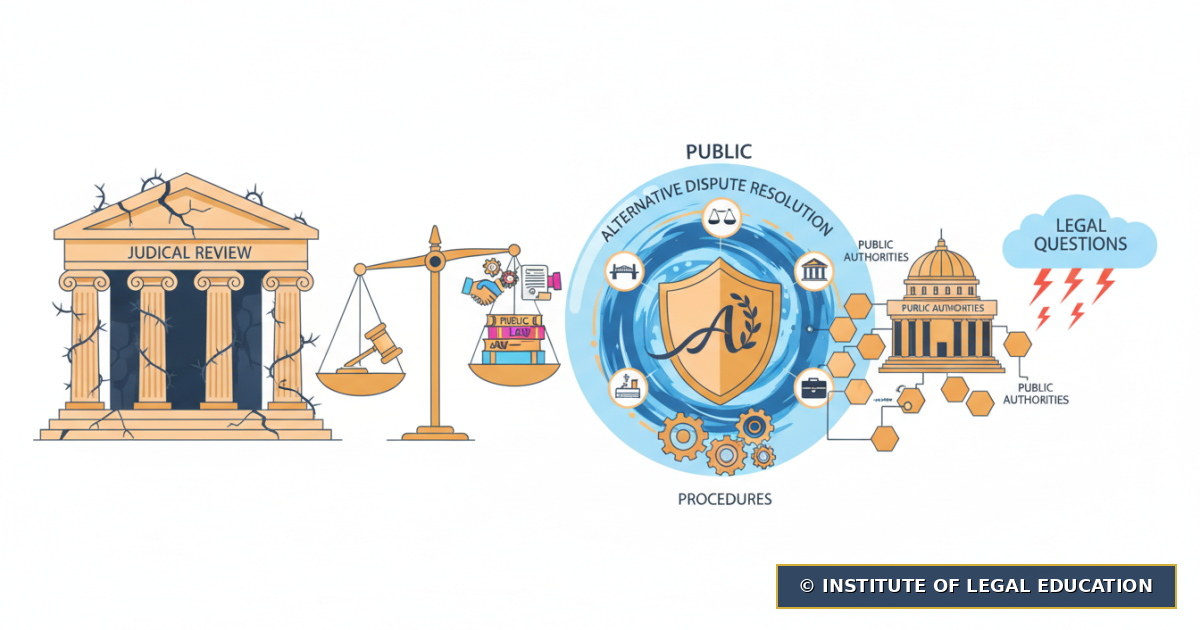
administrative arbitration should not be understood as a substitute for
administrative justice or judicial review. Instead, it should be conceptualized
as a complementary dispute-resolution mechanism whose legitimacy depends on
maintaining a clear distinction between arbitrable private or contractual
interests and non-delegable public-law responsibilities. A balanced legal
framework can therefore reconcile the advantages of arbitration with the
fundamental requirements of legality, accountability, and the protection of the
public interest.
Keywords: Administrative Arbitration; Public
Law; Arbitrability; Public Contracts; Public Authorities; Alternative Dispute
Resolution; Public Interest; Judicial Review; Administrative Justice.
View Full Publication & Citations → Download Full Article (With Cover) Download Article PDF